The difference between hybrid and native mobile apps
Mobile application development is one of the most dynamic and rapidly growing IT industries. Every year, the number of smartphone users increases, and, accordingly, the demand for mobile applications increases. When creating an application, developers face a choice: develop a native application separately for iOS and Android or create a cross-platform hybrid application. Each of these approaches has its advantages and disadvantages. Therefore, you should definitely not hurry with the choice.
Why it’s important to distinguish between native and hybrid apps
The choice between native and hybrid mobile application development is an extremely important decision that can significantly affect the success of the project. Ignoring the differences between these types of applications and choosing the wrong approach can lead to serious negative consequences.
For example, choosing a hybrid app for a project that requires complex animations and graphics will likely cause performance and speed issues on some devices. And, for example, creating full-fledged native iOS and Android versions for a simple information application requires much more effort and money without special advantages in functionality.
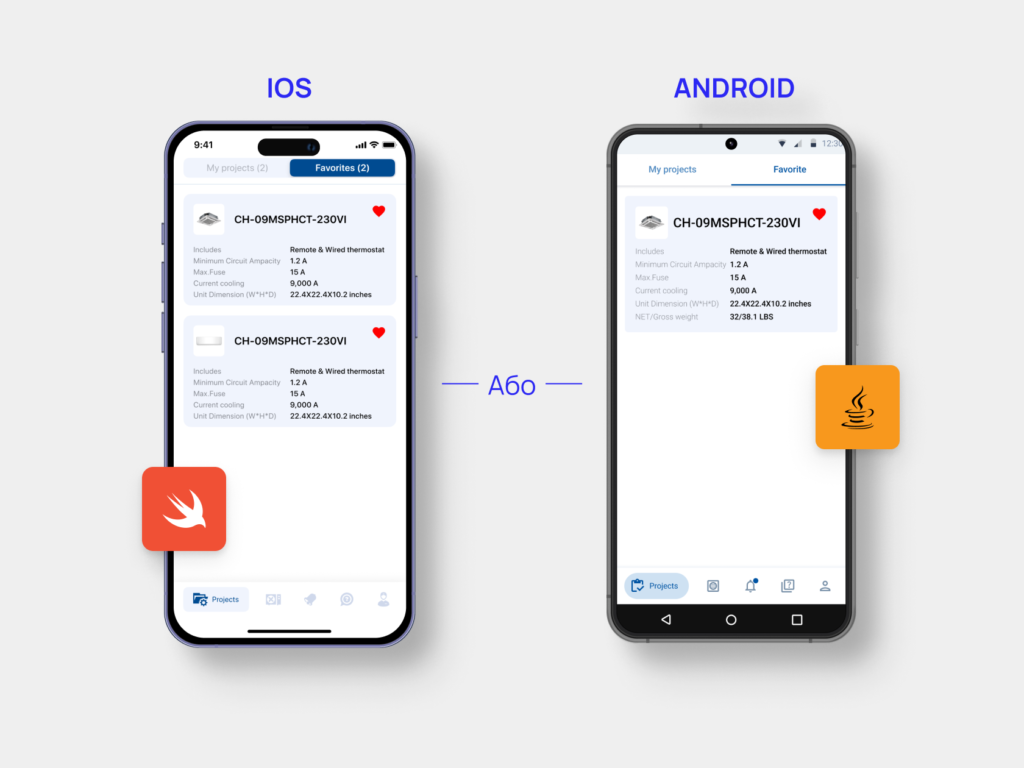
Note that a native and a hybrid application differ significantly in terms of development cost, project completion time, integration capabilities with platform APIs, and many other characteristics. By choosing the wrong approach, the company risks losing the time and effort of the development team, as well as not getting the expected business results from the product launch. Therefore, a thorough analysis of the project and a clear understanding of the specifics of each type of application is mandatory to avoid mistakes and make the right technical decisions that meet the goals and objectives.
However, let’s take a closer look at what native and hybrid applications are.
What are native apps?
Native applications are applications developed specifically for a specific mobile platform (iOS or Android) using “native” programming languages and development tools for this platform. The iOS development process generally places more demands on developers. In particular, the need to use a computer with the macOS operating system. Of course, you can install an unofficial Hackintosh OS, but this is not always a good solution, and it is far from possible to install it on all PCs. With applications for Android, it is mostly easier, but there are also specifics here.
A native application and a hybrid counterpart have both their advantages and disadvantages. We offer to consider them briefly.
Advantages of native applications
Taking into account the specified differences between hybrid and native applications, it is possible to distinguish both important strengths of native solutions and equally important disadvantages. If you need a fast, reliable, stable and secure application, this can be a really good solution for many reasons.
Simplicity
Native apps are easier to learn and more intuitive for users because they follow the design and interface standards of the platform. Users immediately know how to use such apps because they look like other apps on their device. Native apps also provide better compatibility with different screen sizes and display orientations.
Speed of work
Such applications work quickly and stably because they are optimized for their OS and use native programming languages such as Swift for iOS or Java for Android. Native apps can also store data locally on the device, reducing dependency on an internet connection and improving performance.
Security
Native apps have a higher level of security because they undergo strict quality and compliance checks before being published in official app stores such as the App Store or Google Play. They can also use built-in security mechanisms such as biometric authentication, data encryption and SSL certificates.
Better integration
Such applications can easily integrate with other applications and features of the device, such as camera, microphone, GPS, contacts, calendar, notifications, etc. This allows native applications to provide a more complete and convenient user experience, as well as to use the device’s capabilities to the fullest.
Disadvantages of native applications
At the same time, when comparing native applications and hybrid alternatives, one cannot ignore the disadvantages of the former. After all, they are also present and in some cases may well influence the choice of development methods.
Development cost
Native applications generally require more time, resources, and money to develop because they require separate versions for each platform, as well as developers with relevant experience who speak native programming languages. Verification of such applications before publication in the application stores can be quite time-consuming and painstaking. Especially in the App Store.
Advanced upgrade and support
Native apps require regular updates to maintain their functionality and compatibility with new OS and device versions. Updates to native apps are subject to approval by app stores and user opt-outs. Native apps also require more effort to maintain and fix bugs because they have many versions and variants.
Difficulty transferring to other platforms
Native apps cannot run on platforms other than those for which they were developed. If a developer wants to make his app available to a larger audience, he has to create a new version of the app for another platform, which requires a lot of time and money. Native applications also cannot take advantage of web technologies such as SEO, SSO, or classic online analytics.
What are hybrid apps?
An important difference between a native and a hybrid mobile application is that the latter can be developed using the same technologies that are used to create websites. Of course, there are also strengths and weaknesses here.
Advantages of hybrid applications
Hybrid applications are created for several platforms at once and have the same functionality regardless of the platform itself. This is the main difference between native and hybrid app. However, they also have other important advantages.
Cross-platform
Hybrid apps can run on different platforms such as iOS, Android, Windows, as well as web and desktop versions. This allows you to expand the audience of users and ensure the same user experience on different devices.
Development speed
Hybrid apps require less development time because they use a single code base for all platforms. Developers do not need to know native programming languages, but can use common web technologies such as HTML, CSS, and JavaScript. Hybrid apps can also use custom frameworks like React Native, Flutter, Ionic, etc. that simplify the development and adaptation process.
Lower cost of development
Hybrid apps cost less than native apps because they require fewer resources and developers. They also reduce testing and support costs by having a single code base for all platforms. Hybrid apps are also not subject to comprehensive reviews for placement and updates in app stores, as native apps are.
Ease of updates
Hybrid apps are easy to upgrade because they only require a change in one codebase, rather than every version for every platform. Updates to hybrid apps also don’t depend on app store approval, but can happen automatically over the Internet.
Disadvantages of hybrid applications
In many cases, hybrid applications are the optimal solution, especially if you have a limited budget and want to get the product up and running as soon as possible. However, when we compare hybrid and native applications, it is also worth talking about the shortcomings.
Limited performance
Hybrid apps are slower and less stable than native apps because they run in a native container that emulates a web browser. Hybrid applications also depend on the quality of the Internet connection, since they download most of their code from the server.
Limited access to the device
Hybrid apps have less access to device features and resources than native apps because they use web technologies that don’t support the full capabilities of the device’s OS and components. Hybrid apps can also use special plugins that allow them to use some features of the device, but this can lead to compatibility and security issues.
Difficulty supporting old versions
Hybrid apps require more effort to support older OS versions and devices because they use web technologies that may not be compatible with them. Hybrid apps can also have stability and performance issues on older devices because they require more resources to run.
Insufficient optimization for specific platforms
Hybrid apps cannot fully adapt to the specifics of each platform because they use the same interface and design for all platforms. They also cannot take full advantage of native technologies such as animations, graphics, gestures, etc. Hybrid applications can cause discomfort for users who are used to the native design and interface of their platform.
Key differences between native and hybrid apps
A native and a hybrid application can have quite similar or even identical functionality. But at the same time, they will have a fairly wide list of differences. And it is about these differences that we should talk about separately.
A programming language
One of the main differences between native and hybrid apps is the programming language they use. Native apps use, respectively, native programming languages such as Swift for iOS or Java for Android. Hybrid apps use common web technologies such as HTML, CSS, and JavaScript. Native programming languages provide better performance, compatibility, and security, but require more knowledge and experience from developers.
Deployment and Updates
Another difference between native and hybrid apps is the way they are hosted and updated. Native apps need to be installed on the device through official app stores such as the App Store or Google Play. Hybrid apps can also be installed on the device, but they download most of their code from the server. Native apps are subject to rigorous review and approval by app stores and must meet their quality and design standards. Hybrid apps can avoid these limitations, but at the same time run the risk of not meeting user expectations.
Access to device features and resources
Another difference between native and hybrid apps is the level of access to device features and resources, such as camera, microphone, GPS, contacts, calendar, notifications, and more. Native apps can easily integrate with other apps and device features because they use native APIs and SDKs. Hybrid applications have less access to the device’s features and resources because they use web technologies that do not support the full capabilities of the device’s OS and components.
Design and interface
Another difference between native and hybrid apps is the design and interface they provide to users. Native apps follow their platform’s design and interface standards, such as Material Design for Android or Human Interface Guidelines for iOS. Hybrid apps use the same design and interface for all platforms, which may differ from the native design and interface.
Productivity and stability
Last but not least, the difference between native and hybrid apps is the performance and stability they provide. Native applications work quickly and stably because they are optimized for their OS and use native programming languages. Hybrid apps are slower and less stable because they run in a native container that emulates a web browser.
How to choose between native and hybrid mobile applications
When considering a native and hybrid mobile app for development, it is very important to approach the choice carefully so that on the one hand you do not overpay and on the other hand you get a product that will fully meet both your needs and the needs of your customers. Therefore, it is worth taking into account a number of criteria that affect the quality, functionality, cost and development time of your project. Read more about this later.
The target audience of the application
Before deciding which type of app to choose, you need to know who will use your app, what platforms your potential users use, and what their needs and expectations are. Native apps provide a better user experience for a specific OS, but they require separate versions for each platform, which can increase costs and development time. Hybrid apps allow you to reach a larger audience because they run on different platforms, but may have performance, compatibility, and design issues. You need to determine which platform is most popular with your target audience, what their features and requirements are, and choose the type of app that will best satisfy them.
Budget and development time
Another important criterion is the budget and time you are willing to spend on app development. Native apps require more time, resources, and money to develop because they require separate versions for each platform, as well as the involvement of appropriate developers who know native programming languages. Native apps are also subject to reviews for placement and updates in app stores. Hybrid apps cost less than native apps because they require fewer resources and developers. They also reduce testing and support costs by having a single code base for all platforms.
Functionality and performance are essential
Another criterion is the functionality and performance you want to achieve with your application. Native apps provide better functionality and performance because they use native APIs and SDKs that allow them to take full advantage of the device’s OS and components. Hybrid apps have less functionality and performance capabilities because they use web technologies that don’t support the full capabilities of the device’s OS and components.
Desired design and interface
Last but not least is the design and interface you want to provide to users. Native apps follow their platform’s design and interface standards, such as Material Design for Android or Human Interface Guidelines for iOS. Hybrid apps use the same design and interface for all platforms, which may differ from the native design and interface. Native apps provide convenience and appeal to users because they look like other apps on their device.
We’ll help you choose and develop an app just for your business!
So, a native and a hybrid application are quite different software solutions that have many differences in development. And regardless of which application you are interested in, the EJ Developer team is ready to help.
We have many years of experience in developing high-quality mobile applications for iOS and Android, we clearly understand the advantages and disadvantages of native and hybrid solutions and help clients choose the best option. Before starting development, our team will conduct a thorough analysis of your business goals, audience needs, and project specifics. We will help determine the optimal development strategy specifically for your case based on the received data and taking into account the specifics of the industry. All so that you get a quality product for reasonable money!