How much does it cost to develop a taxi app?
The level of digital transformation in today's world is growing rapidly, and digital technologies have long gone beyond the simple creation of websites, opening wide perspectives for their owners and users. One of the key tools became mobile applications, which quickly gained trust and popularity, occupying a fixed position in users' smartphones. Having appeared in the market of applications for the transportation of taxis, Uber has become a real leader, and its success has become an example for others. Everyone wants to repeat or even surpass this success. How does the cost of developing such a taxi app?
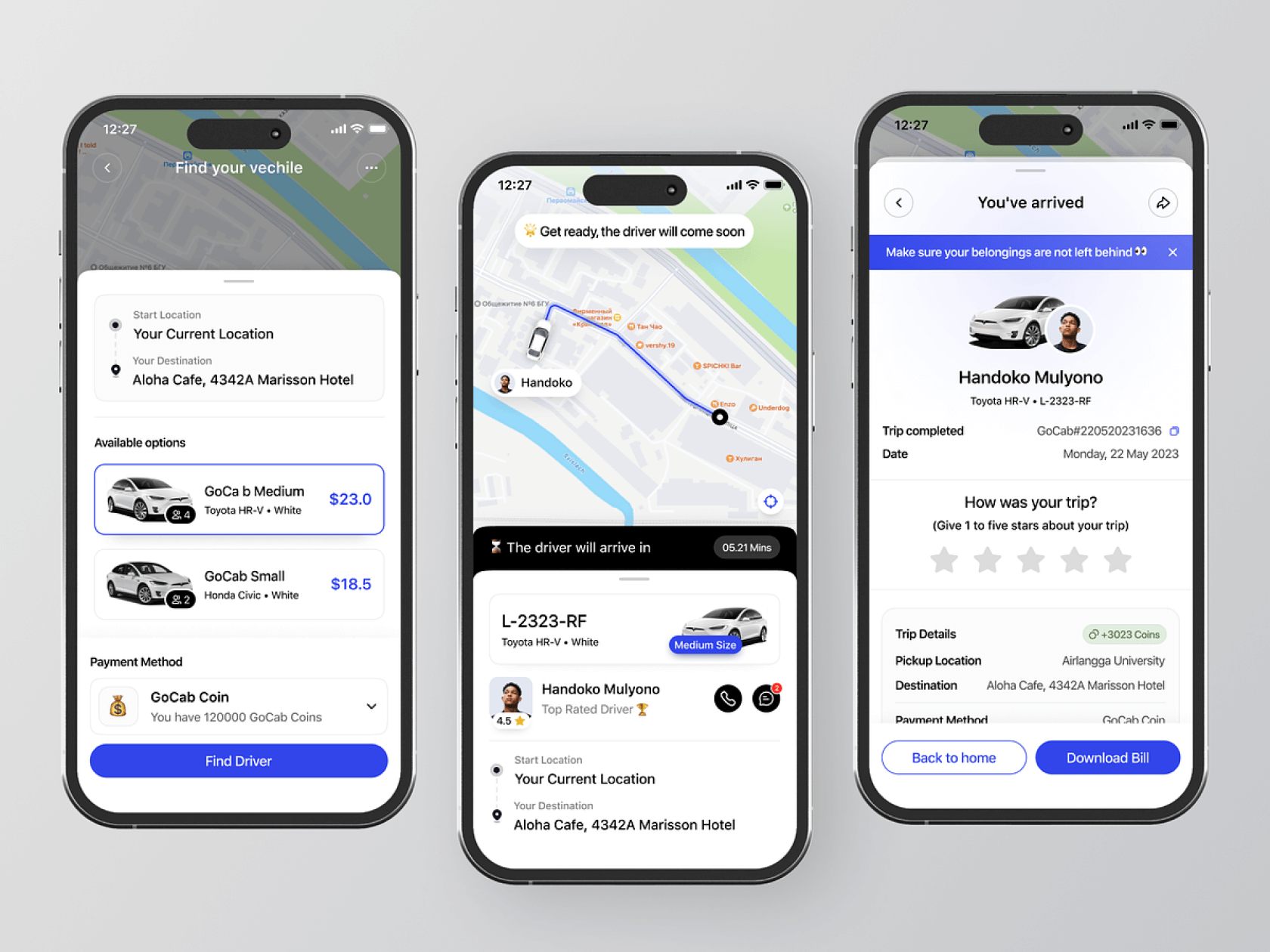
The functionality of the taxi application is required
It should be understood that when we talk about the taxi application, it is not only about the “client part”. Therefore, the answer to the question of how much your taxi application will cost will be formed from several components:
- Client program.
- Application for the driver.
- Administrator panel.
For the system to really work properly, each of these elements must work seamlessly and interact with the other elements. Therefore, we suggest considering these components and their functionality in more detail.
Client program
- Registration
When a user opens the app for the first time, he must register. This stage is common to all users, but we will only mention it here. It is this function that divides the users of the program into three categories: drivers, customers and administrators. Data entered by the user during registration are stored in the database and used for further identification.
- Choosing a car
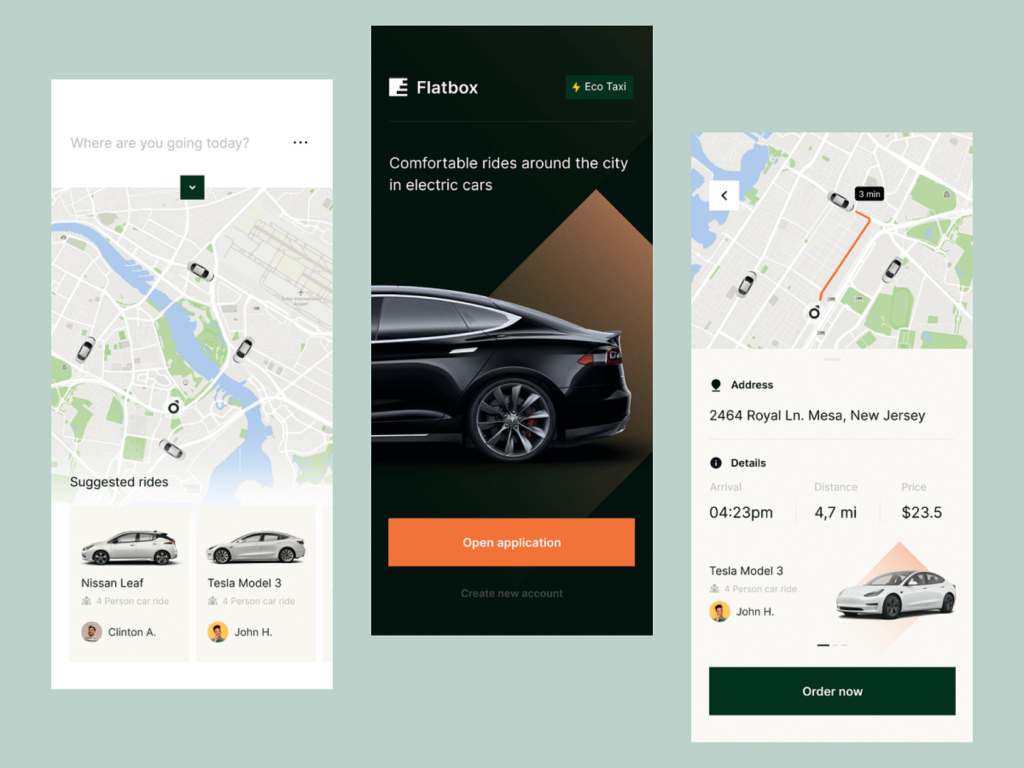
Before the user orders a taxi, he must be able to choose the type and class of the car in which he will travel. For this, it is necessary to have a database of cars with a clear division into types and classes, as well as indicating additional features of the car that users may need: a child seat, a large trunk, etc. A specially developed algorithm will show the user’s order only to drivers whose cars fit all the parameters.
- Trip order
When the car is selected, the user can book their trip. To do this, you need to select the place of departure and the place of arrival. The taxi app allows you to do this with a card or by entering the exact address in the input line. It is also necessary to integrate a GPS module so that the user can call the car to their current location.
- Calculation of the fare
All calculations in the application are also carried out automatically, the cost depends on the route, as well as on the selected type and class of car. It is important that discounts, promotions and promotional codes may be applied when calculating the cost, which must be taken into account when creating the calculator.
- Estimated time of arrival
The estimated time of arrival at the location is also automatically calculated based on the route and traffic conditions along the route, for this the application integrates with maps. It is important to take into account at the time of arrival the time required for the taxi car to reach the client, and not to start the countdown from the moment of the order.
- Real-time tracking
When the driver accepts the customer’s order, his geolocation becomes available to the user. This allows you to monitor the speed of arrival of the car to the passenger, as well as to calculate the time of arrival at the destination in real time.
- Payments
Payment can be made in different ways: cash to the driver upon arrival, or cashless payment through the application. To do this, it is necessary to integrate certain bank modules that will allow the user to link his bank card to the application for automatic payment debiting. It is also possible to pay with Google Pay or Apple Pay, so that the user can choose a card for payment every time and confirm the payment manually. For this, it is necessary to connect the appropriate modules.
- Pop-up messages
Push notifications are one of the best ways to keep in constant contact with your users, and it has found application in taxis as well. Yes, even when the user closes the program after placing an order, he will receive a message that the order has been accepted, about arrival at the place, debiting of funds and so on. You can also notify users about receiving bonuses and promotions.
- SOS alarm button
A safety measure if an emergency happens during the trip – this button allows you to instantly call for help in any situation.
- Rating
The rating function is an opportunity for passengers and drivers to make the experience of their colleagues even better. They can leave ratings and even reviews for those with whom they have just shared a trip. Thanks to this, the taxi service improves and the user experience becomes even better, which positively affects the reputation of your application.
Application for the driver
- Downloading the document
First of all, the driver must have the necessary documents in order to provide taxi services. Among them is a driver’s license, as well as necessary vehicle insurance and so on. Without the appropriate documents, the driver will not be allowed to serve passengers.
- Accessibility
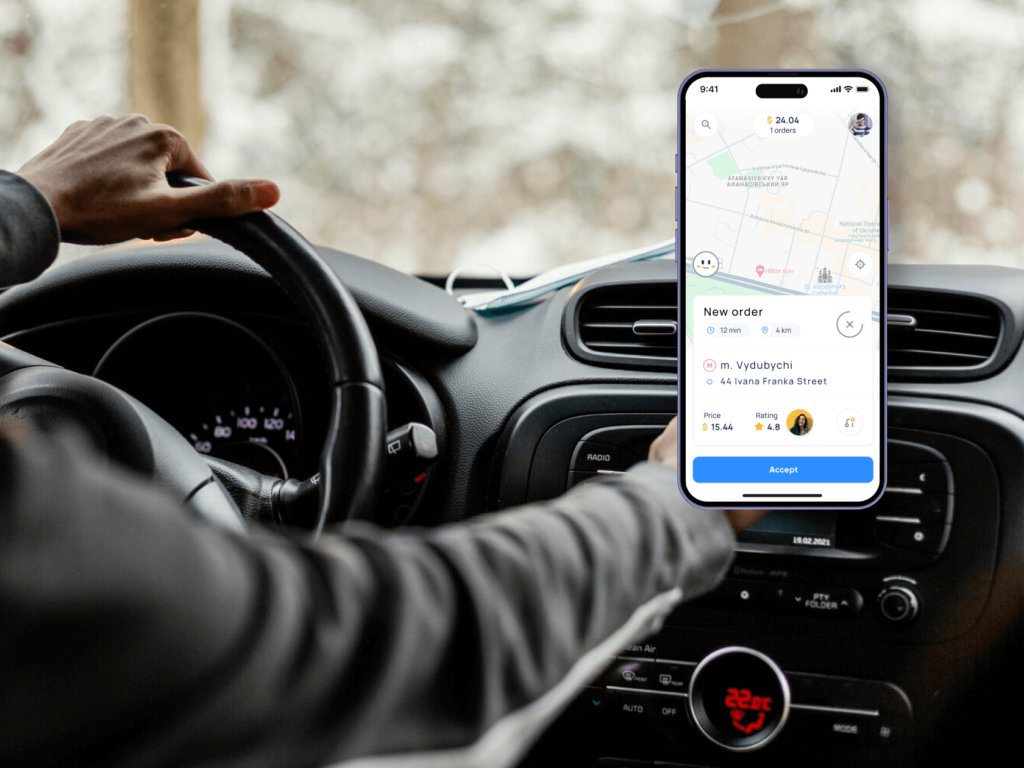
Since drivers are on the road most of the time, the app must be designed in such a way that it does not distract them from driving, but at the same time allows them to take orders and manage their workflow.
- Navigation system
Integration with maps, as well as access to the current location of the driver, allows you to display the meeting point with the passenger on the screen and lay the most optimal route to it, as well as follow the route of delivering the passenger to the destination.
- Earnings
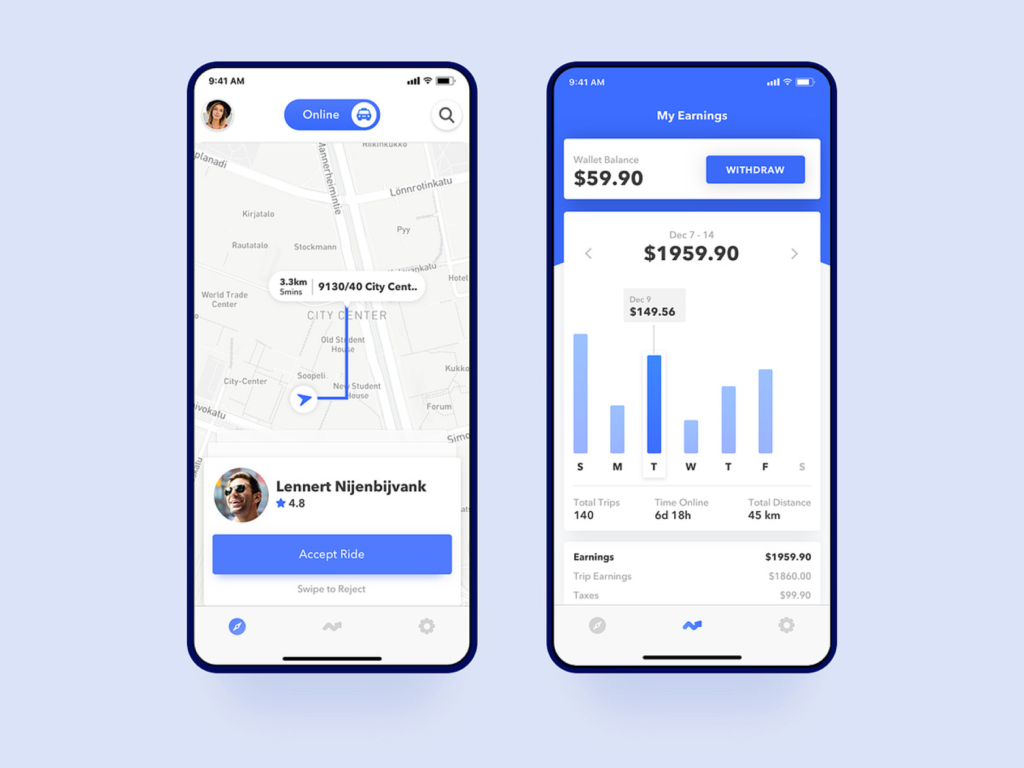
The application enables the driver to receive a cashless payment from the user, and also keeps track of all earnings, which is very convenient for tracking efficiency and profit.
- Rating
The driver’s rating allows him to take even more orders, and the ability to rate passengers – to improve the experience of his colleagues, as well as his own in future trips.
Administrator panel
- Profile check
The administrator makes sure that all the information in the profile corresponds to reality. This primarily concerns drivers and their documents, as well as vehicle data. This is necessary to ensure quality service. But the phone numbers of both drivers and passengers, their e-mails, etc. are also checked to ensure that the service is accurate and of good quality, and that any trip is safe for both parties.
- Transaction verification
All cashless payment operations must be subject to verification to ensure the safety of the driver and to resolve all issues if suddenly the payment does not go through. The task of the administrator is to settle any financial issues, and the program must create all the conditions for this.
What factors affect the cost of developing a taxi app?
To answer the question of how much a taxi app costs, it is necessary to first determine what exactly affects its cost. In fact, there can be quite a lot of influencing factors, depending on which functionality the customer wants to get. However, we will focus on those that are basic in such development.
Functionality
One of the main factors that affects the cost of building a taxi mobile app is the functionality you want to provide to your users. The taxi app consists of two main modules: the passenger app and the driver app (plus, as we mentioned above, the Admin panel). Each of them has its own set of functions that ensure the convenience and efficiency of the service. Here are some of them:
Application for passengers:
- Registration and authorization (via email, phone, social networks, etc.).
- Choice of trip type (economy, comfort, premium, etc.).
- Entering the address of departure and arrival.
- Viewing the cost of the trip and the waiting time.
- Choice of payment method (cash, card, electronic wallet, etc.).
- Ordering a trip and tracking the driver’s movement on the map.
- Rating and feedback about the trip and the driver.
- History of trips and receipts.
- Support and FAQ.
Application for drivers:
- Registration and authorization.
- Entering personal and car data.
- View available orders on the map.
- Order acceptance or rejection.
- Navigation to the address of departure and arrival.
- Confirmation of the start and end of the trip.
- Receiving payment for the trip.
- Evaluation and feedback about the passenger.
- Travel and income history.
- Support and FAQ.
This is not a complete list of functions that can be in a taxi application, but only the most common and necessary ones. You can add or remove features depending on your business model, target audience and competitive advantage. However, it should be remembered that each additional feature increases the cost of developing a taxi app.
Complexity
Another factor that affects the cost of developing a taxi app is the complexity of the project. It is determined by the level of technical complexity, the number of integrations with third-party services and APIs, the quality of design and UX/UI, the level of security and reliability, as well as the amount of testing and debugging. The more complex the project, the more time and resources are required for its implementation, and therefore, the higher the development cost.
Here are some examples of elements that can be in a taxi app:
- Implementation of the algorithm for selecting the nearest driver and the optimal route.
- Integration with payment systems and electronic wallets.
- Integration with social networks and authorization services.
- Integration with geolocation and navigation services.
- Integration with communication and notification services.
- Implementation of the rating and feedback system.
- Implementation of the loyalty system and promotions.
- Implementation of the analytics and reporting system.
- Implementation of the security and data protection system.
It is not always necessary to implement absolutely all of the listed functionality. But in some cases, it is better to do this at the initial stage of development, and not to add the necessary functions already during the use of the application.
Platforms and technologies
Another factor that affects the cost of taxi app development is the platforms and technologies you choose for your project. You can develop a taxi app for different platforms like iOS, Android, Windows, Web or all together.
- Native apps are apps that are developed specifically for each platform using its own programming languages and tools. For example, iOS uses Swift or Objective-C, and Android uses Java or Kotlin.
- Cross-platform apps are apps that are developed using a single programming language and tools that allow the app to run on different platforms. For example, you can use Flutter, React Native, Xamarin or Ionic for cross-platform development.
- Hybrid apps are apps that combine elements of native and web apps. Hybrid apps are developed using web technologies such as HTML, CSS, and JavaScript and run in a native container that allows access to device functionality.
That is, there are really quite a lot of factors that affect the cost of a taxi app. Therefore, we always discuss all aspects of development with the client individually in order to offer optimal solutions in terms of price, quality and functionality.
What is the cost of developing a taxi app?
The cost of a taxi application is at least four components and stages of its creation. And literally every stage can affect the final price. Therefore, let’s briefly consider each of the main stages:
Planning
Planning is the first and one of the most important stages of application development. At this stage, the goals, requirements, terms, budget and resources of the project are determined. Also at this stage, an analysis of the market, competitors, target audience and user needs is carried out. Planning requires high qualifications and experience from the development team, as well as effective communication with the customer.
Planning costs can range from 10% to 20% of the total development cost.
Development
This is the main stage at which the functional and graphical interface of the application is created. Different technologies, programming languages, frameworks, and tools are used at this stage, depending on the chosen platform (iOS, Android, Web, etc.). Development can last from several weeks to several months, depending on the complexity and scope of the project.
Costs for this stage can be from 50% to 70% of the total development cost.
Testing
Testing is the stage at which the quality, reliability, performance and security of the application are checked. Various testing methods and techniques are used in this phase, such as unit testing, integration testing, functional testing, acceptance testing, stress testing, security testing, etc. Testing helps identify and fix bugs, crashes, vulnerabilities, and other issues that can affect user experience and app reputation.
Testing costs can be from 10% to 20% of the total cost of developing an application.
Support
Support is a phase that begins after the launch of the application and continues throughout its life cycle. At this stage, regular updates, improvements, addition of new features, bug fixes and technical support to users are carried out. This helps to maintain relevance, competitiveness and popularity of the application in the market.
Support costs can range from 10% to 30% of the total development cost.
How much does it cost to develop a taxi app?
Returning to the question of what is the price of developing a taxi application, let’s emphasize once again: it is always formed individually for each client, taking into account the specifics of the project.
If we take the Uber app as an example, in the US the cost of a mobile taxi app of this level can range from $10,000 to $50,000, and in some cases even more. However, again, it is not entirely correct to focus on these numbers. First, not everyone needs an Uber-level app. Secondly, the development of applications in Ukraine is significantly cheaper than in the USA.
In any case, the cost of developing a taxi app depends on the specific project and business needs.
How not to overpay for the development of a mobile application for a taxi?
We have repeatedly emphasized that there is no clear answer to the question of how much it costs to create a taxi app. Everything is individual. And that means there are ways to save money that you can use to avoid overpaying.
- Define your target audience and market. Before you outsource taxi app development, you need to know who your potential users are, what their needs, problems, pains and expectations are from the app.
- Describe your business model and monetization. Developing a taxi app is not only a technical task, but also a business one. You need to have a clear idea of how you will monetize your app, what your revenue streams are and your expenses, how you will attract and retain users, how you will scale your app, and how you will measure your success.
- Choose the optimal platform and technologies. The choice of platform and technology to develop a taxi app can significantly affect the cost. However, choosing to develop only for iOS or only for Android is still not worth it.
Do you want to get all the functionality you need and not overpay? The EJ Developer team is at your service
As we have determined, comprehensive development of a taxi app can be both relatively inexpensive and very expensive. Our task is to offer you optimal solutions that will fully meet your personal requirements and the requirements of your future customers. And at the same time, they will not be a serious blow to the budget.
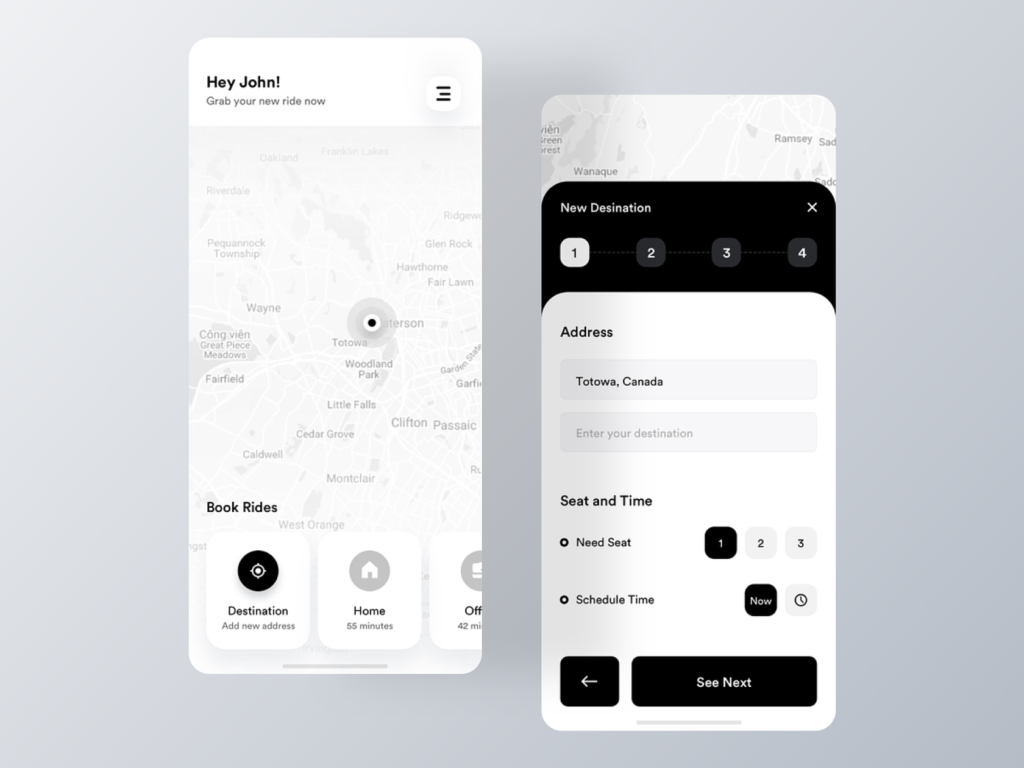
The EJ Developer team is ready to offer you custom taxi app development for all popular platforms and provide several key benefits:
Turnkey development by our specialists without the involvement of third-party developers.
Complex management of the project from the initial discussion to the placement of the application in application stores and its further support.
Competitive prices relative to the market without unexpected payments and additional costs.
Contact EJ Developer managers today to get a free consultation and discuss our future cooperation in detail.